
Thursday 07 May 2026 15:01 BST
Donald Trump once more believes he is closing in on a deal to end the two-month conflict with Iran, despite both sides appearing unwilling to budge on key issues.
Thousands of people have died in strikes across the Middle East since the war began on 28 February. Global trade has been decimated, inflicting massive economic damage and driving millions into poverty and hunger. Violence has spread across the region, notably between Israel and Hezbollah in southern Lebanon.
But the latest proposal to end the war could see the US exit with key questions still unanswered.
The latest offer is based on a one-page memorandum of understanding, which in turn is expected to lay out a wider framework for another month of more detailed negotiations on the lingering nuclear issue.

Donald Trump speaks during a military mothers celebration in the East Room of the White House on May 6 (Getty)
With Iran still to respond, first impressions suggest Washington has pared back the demands made of the regime at the start of the war.
The Independent looks at how it stands up to past agreements with Tehran.
Reopening the Strait of Hormuz
If agreed, the one-page 14-point memo would declare an end to the war in the region and usher in a 30-day period of negotiations on a more comprehensive plan to reopen the Strait, limit Iran’s nuclear programme and lift US sanctions, according to Axios.
A US official told the outlet that the American offer, still to be negotiated by Trump’s envoys Steve Witkoff and Jared Kushner, would set out terms for both the US and the Iranian blockades to be gradually lifted over a 30-day period.
Meanwhile, delegations would meet in Islamabad or Geneva for fresh talks on Iran’s nuclear programme. If talks collapse, US forces would be able to restore their blockade or resume military action, a US official said.
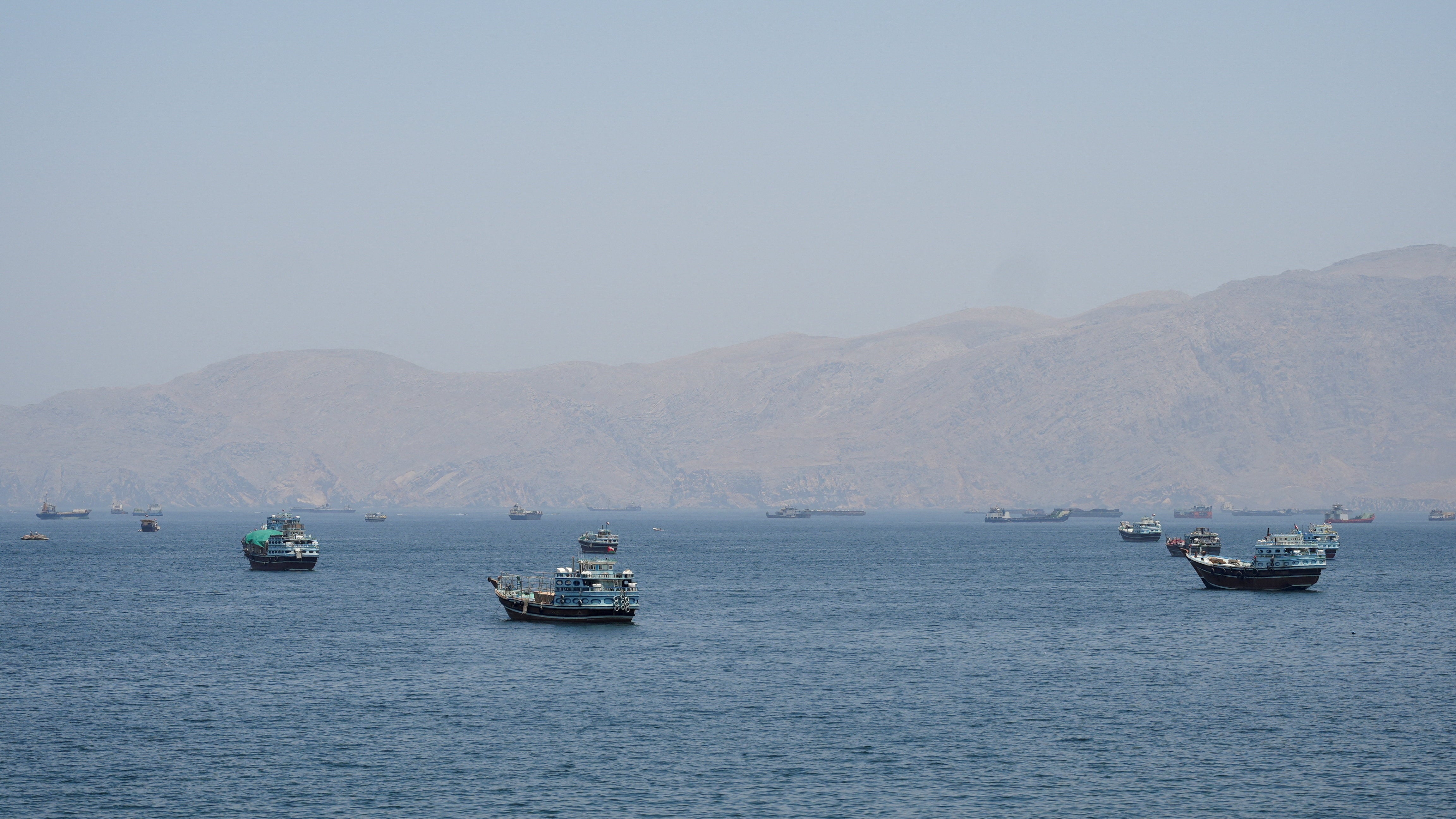
Vessels in the Strait of Hormuz, Musandam, Oman, May 6 (Reuters)
The starting point of the new 14-point plan is unclear, although it bears some similarities with a 14-point offer floated by Iran last week, which set out a gradual end to both blockades and “a new mechanism for the Strait of Hormuz”.
Before the conflict erupted on 28 February, the Strait of Hormuz was an international waterway carrying around 20 per cent of global oil and gas without Iranian interference.
While international law mandates that no country can limit traffic through the strait, Iran has been eyeing a post-war deal in which the US leaves it to enforce tolls on commercial ships. The US has so far opposed such plans, threatening shipping firms with sanctions for paying Iran.
The unprecedented closure of the Strait of Hormuz has wrought huge damage on global economies as shortages of oil and gas drive up prices.
A barrel of crude oil that cost $72 on 27 February costs $99.33 at the time of writing, driving inflation and hurting business and consumers around the world.
Reining in Iranian nuclear enrichment
According to Axios, US negotiators are now willing to consider a moratorium on uranium enrichment, essentially suspending Iran’s nuclear programme for several years before allowing limited enrichment for civilian use, up to 3.67 per cent.
Iran’s last offer had suggested a 15-year freeze on uranium enrichment, thereafter allowing enrichment up to 3.6%, and holding no stockpiles of enriched material, according to Al Jazeera.
Three sources told Axios that the compromise would likely be “at least 12 years”, with the US seeking 20.
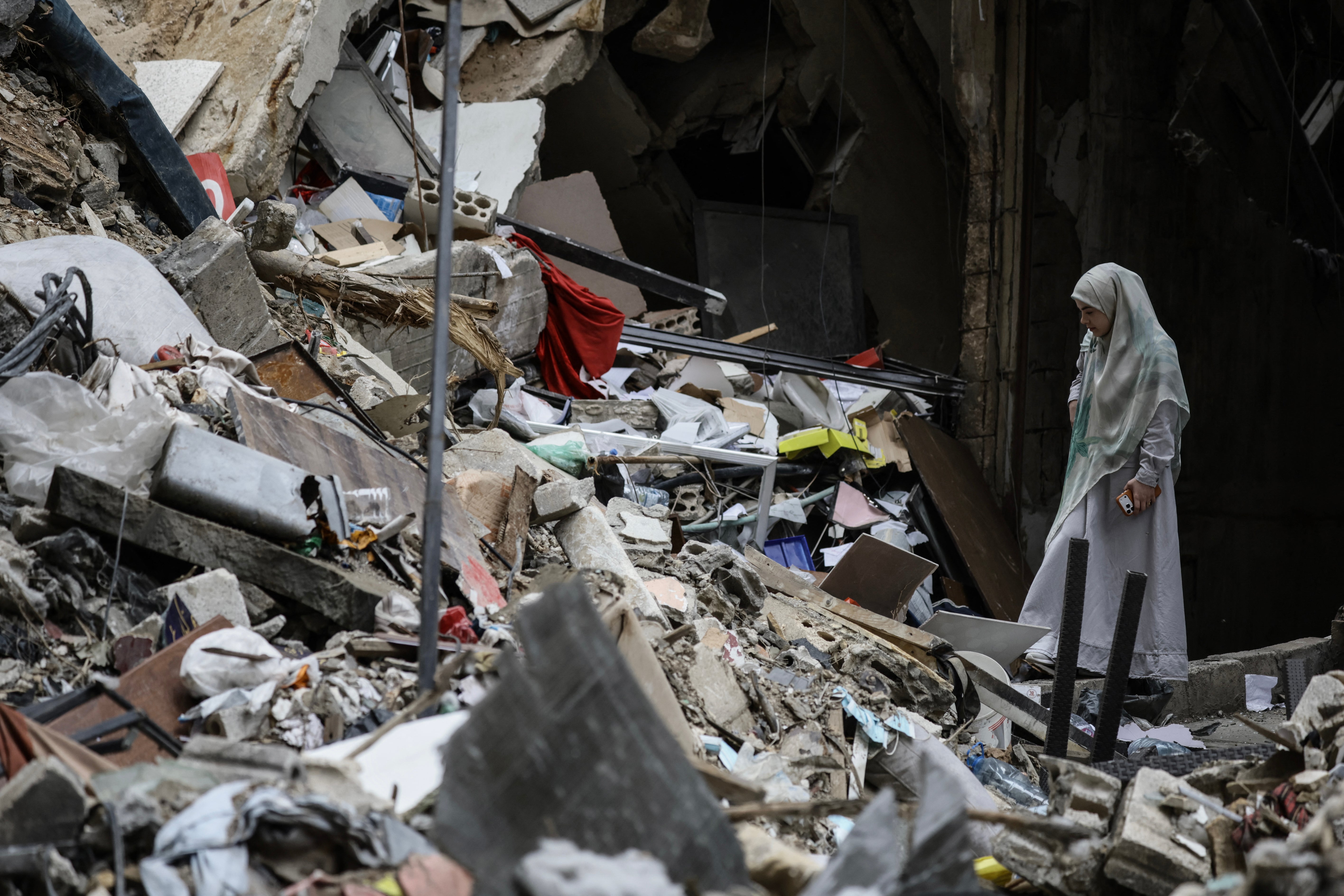
A woman stands amid the debris of a destroyed building in the Haret Hreik area of Beirut's southern suburbs during a media tour organised by Iran-backed militant group Hezbollah on April 20 (AFP/Getty)
Such a freeze would be somewhat tougher than imposed by the Joint Comprehensive Plan of Action (JCPOA) - agreed by Obama in 2015 and abandoned by Trump in 2018. Trump has repeatedly criticised the agreement for giving Iran “the right to have top-of-the-line nuclear weapons”.
That deal had aimed to rein in Iran’s ability to enrich uranium, cutting the number of gas centrifuges by two-thirds and forbidding it from enriching beyond 3.67 per cent purity for 15 years, with stockpile limits of 300kg.
But after Trump withdrew from the deal and reimposed sanctions, Iran abandoned the limits. Iran is now believed to have around 440kg of uranium enriched to 60 per cent, the level at which it becomes much faster to get to the c.90 per cent needed for a nuclear weapon.
Critics have said the JCPOA traded temporary nuclear constraints for permanent sanctions relief, although a raft of sanctions were reimposed in September last year under a ‘snapback’ mechanism, following reported breaches of the 2015 deal.
Notably, in the early hours of the day the war erupted on 28 February, Oman hailed a breakthrough in the US-Iran talks it had been mediating, saying Tehran had already agreed to zero stockpiling of uranium and to convert existing material into fuel.
During those talks before the war, the US had insisted upon widening talks to address the IRGC’s support for regional proxy groups and command of ballistic missiles. It is unclear from current reporting whether the new 14-point memo would tackle either.
Sanctions relief for Tehran
The latest plan under discussion is light on detail, but says the US would commit to a gradual lifting of sanctions and the gradual release of billions of dollars in Iranian funds frozen around the world. It is unclear from reports which sanctions would be pared back.
Sanctions relief has long been a lever for Washington to use in negotiations. The 15-point plan floated in March likewise offered limited sanctions relief, as well as controlled cooperation to build Iran a civilian nuclear industry.
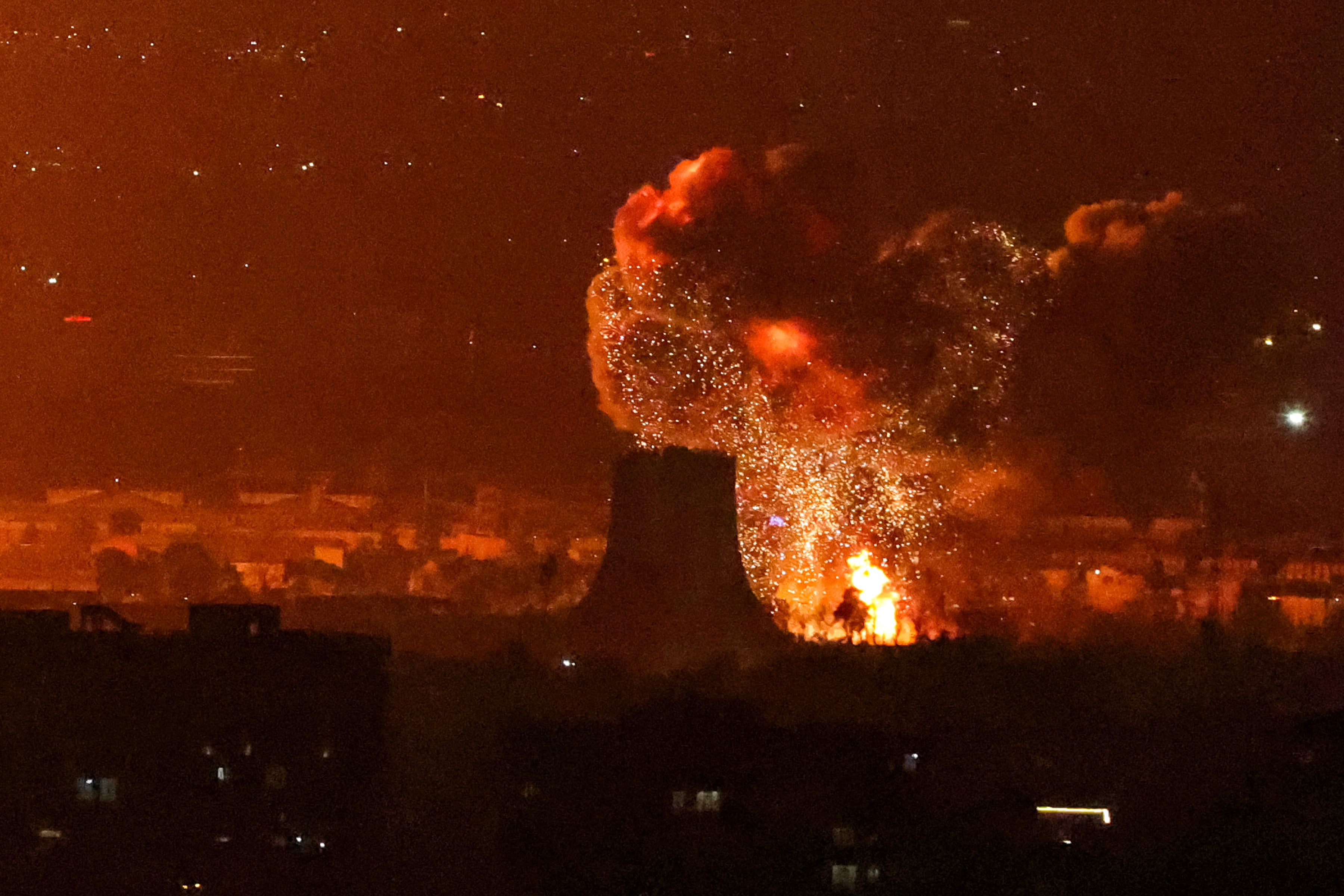
An explosion erupts following strikes near Azadi Tower close to Mehrabad International Airport in Tehran on March 7 (AFP/Getty)
The US elected to lift sanctions on some Iranian oil in March anyway, in a bid to contain rising energy prices, a result of the closure of the Strait of Hormuz.
Back in February, Iran suggested it could agree to dilute its most highly enriched uranium in return for the lifting of all financial sanctions.
Iran has been slapped with US sanctions and offered intermittent relief since 1979. In late 2013, the US offered limited sanctions relief and the repatriation of some frozen assets in return for Iran halting enrichment of uranium to 20 per cent and opening up to regular inspections.
Encouraging reports from the UN’s nuclear watchdog led to the waiving of further sanctions, ahead of the signing of the JCPOA with the UK, France, Russia, China and Germany in 2015.


No comments:
Post a Comment