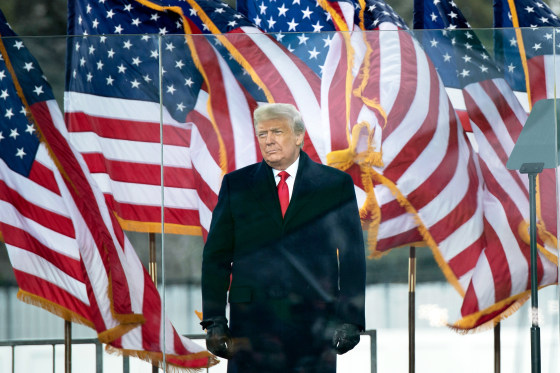

Jan. 6 prosecutor Andrew Floyd and other targets of the Trump administration had sued to block what critics had described as a “slush fund” for Trump allies.
May 29, 2026
A federal judge has temporarily blocked the Trump administration’s $1.8 billion “anti-weaponization” fund, created as part of an unprecedented settlement with the president, his family and the Trump Organization.
U.S. District Judge Leonie M. Brinkema of the Eastern District of Virginia entered the order Friday after a Jan. 6 prosecutor and others sued to block the fund last week.
The fund is being operated out of the Justice Department, which didn’t immediately comment on the order.
Both Democrats and Republicans have criticized the fund. Opponents have labeled it a massive “slush fund” for President Donald Trump’s allies. Its existence has alarmed some legal experts, in part because there will be very little public oversight over how it is managed. Senate Republican leaders last week punted a vote on a GOP package to fund ICE and the Border Patrol until June in part because of concerns over the fund, NBC News reported.
The Trump administration cannot take any further action on the fund while legal motions are pending, “which includes the transferring of money to the fund; the consideration of any claims submitted to the fund; and the disbursing of any funds from the fund,” according to the order.
The judge said the order was necessary to “ensure that no funds are irreversibly disbursed from the Anti-Weaponization Fund” while there are motions pending to block the distribution of funds. She set a hearing for June 12.
Democracy Forward President and CEO Skye Perryman, who heads the group that filed the suit, said the judge’s order “recognized the urgent need to prevent taxpayer dollars from being distributed through a secretive and unprecedented political compensation scheme” that needed to be fully reviewed by a court.
“This is a victory for transparency, the rule of law, and the American people,” Perryman said in a statement. “No administration has the authority to spend public money through a political rewards program that Congress never authorized.”
The process to apply for money can’t officially begin until five commissioners are chosen to decide how the money is doled out, though people who claim they were targeted by the government have already requested money. The White House referred questions to the DOJ.
It’s also not clear how people would formally apply. The pool of possible applicants is substantial, according to the DOJ.
Andrew Floyd, who headed a task force in the now-closed Capitol Siege Section of the U.S. Attorney’s Office for the District of Columbia, before he was dismissed in July, filed a declaration in connection with the lawsuit on Thursday. Floyd prosecuted cases related to the Jan. 6, 2021, Capitol riot.
The Trump administration “is gifting the people I helped investigate and prosecute after January 6” access to what he described as an illegally created process designed to “rush money out the door to perceived political allies, while treating me and people like me as disfavored enemies.”
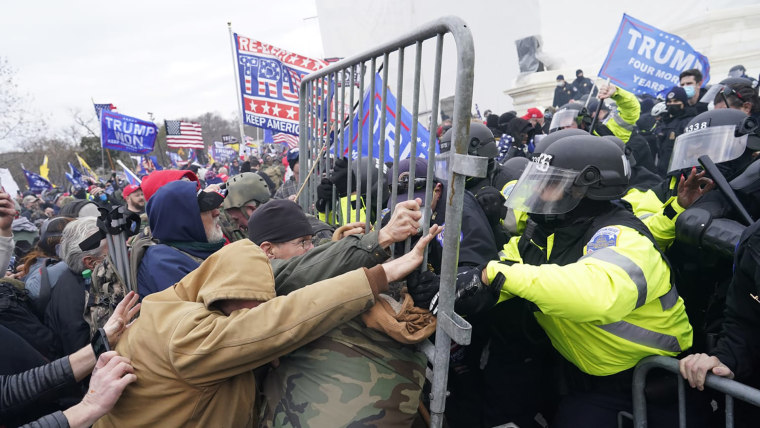 Trump supporters clash with police at the Capitol on Jan. 6, 2021. Kent Nishimura / Los Angeles Times via Getty Images file
Describing the firing of dozens of law enforcement officials as “appalling,” he wrote that no president should be able to abuse their authority to target those who did their jobs.
“The president’s targeting of me and others involved in January 6 prosecutions leaves our country in a very dark place, sending a message that insurrection and sedition will be protected (and even encouraged) as long as it is on behalf of this administration,” Floyd wrote.
The Trump administration moved to set up the fund just ahead of court deadlines over a $10 billion lawsuit Trump filed against the executive branch he controls in connection with a years-old leak of his IRS records.
A federal judge in Florida had questioned whether a court could even hear the case, given Trump’s control over the Justice Department attorneys who would be responding to the lawsuit. Trump’s private attorneys dismissed the case and announced a settlement of other claims against the government the day the fund was announced.
The fund is facing other lawsuits in Washington.
Trump mass pardoned roughly 1,500 Jan. 6 defendants on his first day back in office last year. Last week, the Trump administration began erasing news releases about Jan. 6 prosecutions from the Justice Department’s website, which it described as “partisan propaganda.”
“We will do everything in our power to make whole those who were persecuted for political purposes,” read a statement posted from a Justice Department social media account.


No comments:
Post a Comment