

Live updates
- Mediators from Pakistan and Qatar say the US and Iran have made “encouraging progress” on the first day of high-level talks in Switzerland.
- They say the US and Iran have agreed on “a roadmap for a final deal to be reached within 60 days”, as well as a “de-confliction cell” to ensure an end to “military operations in Lebanon”.
- Earlier, US President Donald Trump threatened to attack Iran over its support of Hezbollah, but Tehran’s top negotiator, Mohammad Bagher Ghalibaf, said the US should be careful with its rhetoric.
- Israeli Defence Minister Israel Katz says Israeli forces will remain in southern Lebanon as long as necessary, as Hezbollah vows to confront any violation of the ceasefire.
4m ago (06:00 GMT)
Israel deports Greek trade union delegation travelling to Ramallah
Greek and Palestinian authorities have condemned Israel’s decision to deny entry to a delegation of Greek trade union representatives travelling to Ramallah in the occupied West Bank.
Greece’s Foreign Ministry said it was concerned after Israeli authorities denied entry to and deported the Greek nationals, who had been invited by the Palestinian General Federation of Trade Unions for a solidarity visit.
Athens said the travellers had fulfilled all entry requirements and declared the purpose of their visit to Israeli authorities upon arrival.
The Palestinian Foreign Ministry went further, strongly condemning what it called an “arbitrary and unlawful measure” amounting to a violation of international law and trade union freedoms. It said delegation members were subjected to interrogation, detained for several hours and then deported.
The ministry accused Israel of trying to prevent international delegations from witnessing conditions under occupation, calling the move part of broader efforts to isolate Palestinians from the international community.
7m ago (05:50 GMT)
Did Iran get what it wanted?
By Resul Serdar AtasReporting from Tehran, Iran
For now, mostly yes.
Iran had set conditions for starting the technical talks.
It said the memorandum of understanding – particularly Articles 1, 10 and 11 – had to be initiated and implemented, and that the technical talks would not start or move forward until that happened.
Now that the parties have agreed the technical talks in Switzerland will continue throughout the week, there are signs of progress.
Indeed, the Iranian foreign minister has confirmed that Iran received what it wanted.
He said Iranian oil and petrochemical exports had been waived and the blockade lifted – another of Iran’s conditions. Some of Iran’s frozen assets have now been released, he said, and a construction and development plan for Iran has been launched.
These are quite significant developments for Iran.
17m ago (05:40 GMT)
Netanyahu says Israel will stay in the southern Lebanon buffer zone
Israeli Prime Minister Benjamin Netanyahu says Israel will remain in a security zone in southern Lebanon for as long as it deems necessary.The Israeli-established buffer zone spans about 602 square kilometres (230 square miles), about 6% of Lebanon’s land area.
27m ago (05:30 GMT)
Head of IRGC’s Quds Force warns Israel to leave southern Lebanon
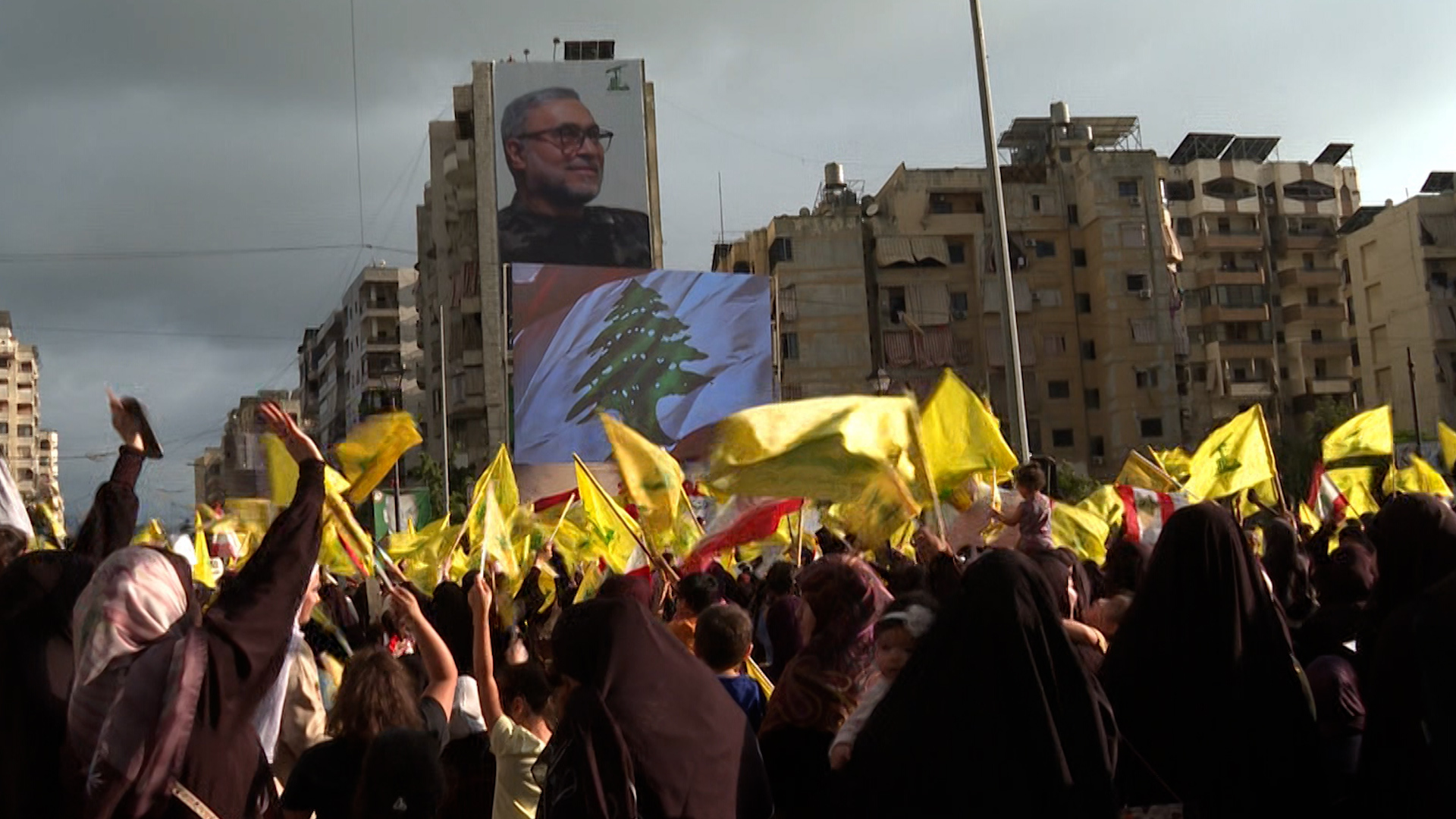
The head of the Islamic Revolutionary Guard Corps’s Quds Force has warned Israel to leave southern Lebanon or face a repeat of its unconditional withdrawal from the country in 2000.
Esmail Qaani said in a post on social media that if Israel persisted in its “aggression and occupation”, it would be kicked out in “humiliation and defeat”, according to state-run Press TV.
“If you do not withdraw from southern Lebanon on your own feet, the epic of the year 2000 will be repeated once again, the same year you fled this land in disgrace,” Qaani said. “The choice is yours.”
Liberation Day is celebrated every May 25 in Lebanon to mark the withdrawal of Israeli soldiers from the south of the country in 2000, after 22 years of occupation.
42m ago (05:15 GMT)

“You’re not going to have a deal on the nuclear file, without also having a deal on the sanctions and the frozen assets,” Warrick told Al Jazeera. “So this is a situation where one side gives on what the other side wants the most and then gives up in return what the other side wants.”
On the nuclear issue, “the biggest problem is that removing or downgrading the enriched uranium is going to take several thousand people, probably 1,000 Americans, going into some of Iran’s most sensitive nuclear sites,” he said, referring to Washington’s demand for a role in diluting Iran’s enriched uranium stockpile.
“I can’t imagine Iran being very happy with that idea,” he said.
Warrick also noted that lifting economic sanctions imposed on Iran will not necessarily be easy where the sanctions were imposed by Congress.
“Congress is very unhappy with this deal right now. And it is not at all clear that Congress would agree to lift some of those sanctions that Iran wants lifted,” he said.
“So it’s not just that the technical talks are going to be hard. They are really hard, and some of these are going to involve discussions that are clearly going to have to go beyond the next 60 days.”
57m ago (05:00 GMT)
Esmail Qaani said in a post on social media that if Israel persisted in its “aggression and occupation”, it would be kicked out in “humiliation and defeat”, according to state-run Press TV.
“If you do not withdraw from southern Lebanon on your own feet, the epic of the year 2000 will be repeated once again, the same year you fled this land in disgrace,” Qaani said. “The choice is yours.”
Liberation Day is celebrated every May 25 in Lebanon to mark the withdrawal of Israeli soldiers from the south of the country in 2000, after 22 years of occupation.
42m ago (05:15 GMT)
Technical talks between US and Iran will be ‘really hard’
Thomas Warrick, a non-resident senior fellow at the Atlantic Council, says the upcoming technical talks will be “really hard” and could take longer than the 60 days included in the interim deal.“You’re not going to have a deal on the nuclear file, without also having a deal on the sanctions and the frozen assets,” Warrick told Al Jazeera. “So this is a situation where one side gives on what the other side wants the most and then gives up in return what the other side wants.”
On the nuclear issue, “the biggest problem is that removing or downgrading the enriched uranium is going to take several thousand people, probably 1,000 Americans, going into some of Iran’s most sensitive nuclear sites,” he said, referring to Washington’s demand for a role in diluting Iran’s enriched uranium stockpile.
“I can’t imagine Iran being very happy with that idea,” he said.
Warrick also noted that lifting economic sanctions imposed on Iran will not necessarily be easy where the sanctions were imposed by Congress.
“Congress is very unhappy with this deal right now. And it is not at all clear that Congress would agree to lift some of those sanctions that Iran wants lifted,” he said.
“So it’s not just that the technical talks are going to be hard. They are really hard, and some of these are going to involve discussions that are clearly going to have to go beyond the next 60 days.”
57m ago (05:00 GMT)
If you’re just joining us
Here’s what you need to know:- Pakistan and Qatar say “encouraging progress” has been made on day one of US-Iran talks in Switzerland, “including the creation of a mechanism for further technical talks”.
- The joint statement from the mediators says the US and Iran also agreed to create a “de-confliction cell” to ensure military operations end in Lebanon.
- Iranian Foreign Minister Abbas Araghchi has hailed “major progress” to end the war in Lebanon and says the US has agreed to waive sanctions on Iranian oil and release some frozen assets.
- Iranian Foreign Ministry spokesperson Esmaeil Baghaei says the Iranian delegation has refused to continue quadrilateral talks with the US after US President Donald Trump’s “threatening statement”.
- Trump had written on social media that if Iran did not control its proxies in Lebanon, meaning Hezbollah, “we’ll hit Iran very hard again”.
- Baghaei also says the work of Tehran’s negotiating team in Switzerland is now “complete” and technical teams would continue their work this week.
1h ago (04:45 GMT)
Air Asia X to lower fares as jet fuel prices drop
AirAsia X CEO Bo Lingam says the Malaysian budget carrier has cut fares by 5 percent since June 15, and will continue adjusting its pricing week by week as jet fuel costs fall.Lingam said the signing of the US-Iran memorandum of understanding had brought welcome relief to the aviation industry, with fuel prices retreating sharply from their March highs.
“The industry has been really affected by the rise in fuel prices. Hopefully, everything in the Middle East stays as it is today,” he told reporters.
Singapore jet fuel was trading at about $112 a barrel on Friday, well below the March 30 peak of $242, though still significantly above the pre-conflict price of about $80 a barrel.
“Week by week, as fuel prices go down, we will also be revising our fares,” Lingam said.
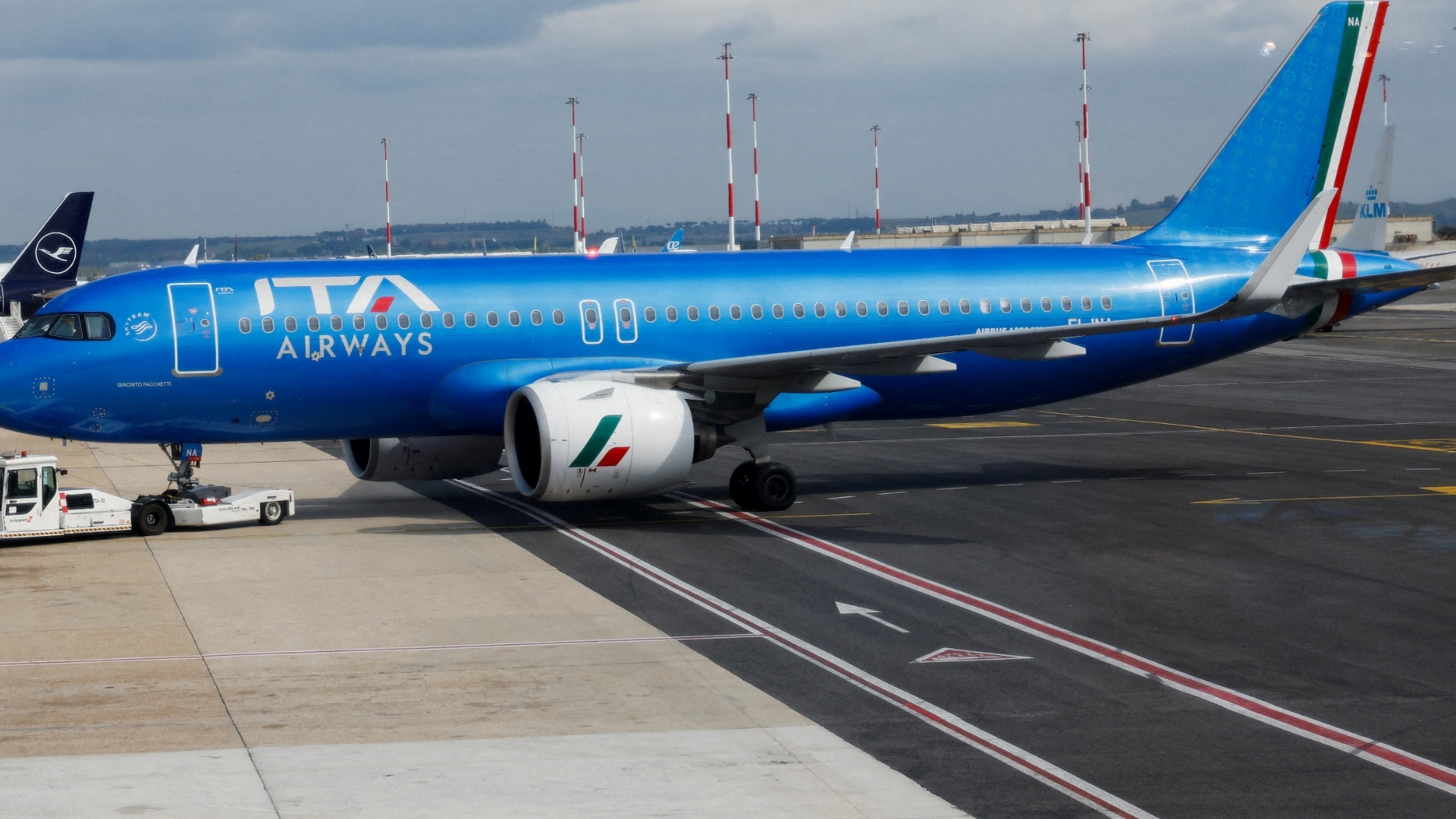
EU clarifies no compensation for passengers during jet fuel shortages
1h ago (04:30 GMT)
Trump’s threats against Iran aimed at ‘maintaining leverage’
Joey Hood, a former senior US diplomat who served as ambassador to Tunisia, says Trump’s threats to hit Iran very hard appear to be a bid to “maintain some level of leverage after having apparently given away quite a bit of it in this MOU”.Hood told Al Jazeera that the MoU, in his view, “demonstrates quite a fair bit of unwarranted optimism”.
For instance, neither the government of Lebanon nor that of Israel were included in the negotiations, and are now being called upon to enforce a ceasefire between Hezbollah and the Israeli military.
“So it’s giving Iran that veto power over Lebanon that it doesn’t deserve in any way, because it has been a driver of instability [there] all these years. So the MoU seems to be saying, we accept Iran’s regional leadership role, including over its proxies, but Trump is saying in his tweets, we actually don’t accept that,” Hood said.
“So it seems to be some way of trying to get them to the table, but maintaining leverage at the same time,” he added.
1h ago (04:15 GMT)

What did the US and Iran agree to in the first day of talks?
- According to Pakistan and Qatar, the US and Iran have agreed on a 60-day roadmap to reach a final deal.
- A high-level committee has been established to provide political oversight of the mediation.
- Chief negotiators will regularly report to the committee and oversee working groups, including on Tehran’s nuclear programme and US sanctions on Iran.
- The parties have set up “a communication line” on the Strait of Hormuz and a “de-confliction cell” to end military operations in Lebanon.
- Iranian Foreign Minister Abbas Araghchi separately declared “major progress” in ending the war in Lebanon.
- He also said the US has waived sanctions on Iranian oil exports and released some of Iran’s frozen assets. He added that a major reconstruction and development plan for Iran has been launched.
1h ago (04:00 GMT)
Scahill tells The Bottom Line that chances are “very, very slim” for talks to move beyond a memorandum of understanding to a comprehensive agreement between Iran and the US to end the US-Israel war on Iran.
If the White House “hasn’t been able to force Israel to abide by the minimal set of agreements” in the Trump-brokered Gaza ceasefire of October 2025, Iranian leaders are sceptical about progress in their talks as well, Scahill says.
2h ago (03:45 GMT)
Reporting from Lucerne, Switzerland
Following that statement from the mediators, the spokesman for the Iranian foreign ministry has also responded.
Esmaeil Baghaei, who also speaks for the high-level Iranian delegation holding the talks, said the war on all fronts, including Lebanon, must end, and that all clauses of the memorandum of understanding (MoU) had been discussed.
But he said that since US President Donald Trump issued that threat, the parties ended the quadrilateral format of the meeting. They then met with the mediators and discussed all issues, including oil exports and the unfreezing of assets, while the Qataris and Pakistanis tried to steer these talks and keep them on track.
Still, it appears that there has been movement.
According to the mediators, there has been constructive engagement, and the working groups formed by the negotiators are to begin work immediately. A lot of work still remains to be done and it is not yet clear how these groups will be formulated, in which capacity they will work, or what format any future meaning will take.
Iran, US, Israel – Memorandum of misunderstanding?
Israeli actions in Lebanon – and US President Donald Trump’s failure to stop them – could lead to the breakdown of Iran-US diplomacy, argues Jeremy Scahill, co-founder of Drop Site News.Scahill tells The Bottom Line that chances are “very, very slim” for talks to move beyond a memorandum of understanding to a comprehensive agreement between Iran and the US to end the US-Israel war on Iran.
If the White House “hasn’t been able to force Israel to abide by the minimal set of agreements” in the Trump-brokered Gaza ceasefire of October 2025, Iranian leaders are sceptical about progress in their talks as well, Scahill says.
2h ago (03:45 GMT)
‘A lot of work still remaining to be done’ in Switzerland
By Osama Bin JavaidReporting from Lucerne, Switzerland
Following that statement from the mediators, the spokesman for the Iranian foreign ministry has also responded.
Esmaeil Baghaei, who also speaks for the high-level Iranian delegation holding the talks, said the war on all fronts, including Lebanon, must end, and that all clauses of the memorandum of understanding (MoU) had been discussed.
But he said that since US President Donald Trump issued that threat, the parties ended the quadrilateral format of the meeting. They then met with the mediators and discussed all issues, including oil exports and the unfreezing of assets, while the Qataris and Pakistanis tried to steer these talks and keep them on track.
Still, it appears that there has been movement.
According to the mediators, there has been constructive engagement, and the working groups formed by the negotiators are to begin work immediately. A lot of work still remains to be done and it is not yet clear how these groups will be formulated, in which capacity they will work, or what format any future meaning will take.


No comments:
Post a Comment