 Jul 30, 2026, 8:00 AM ET
State Street SPDR S&P 500 ETF Trust (SPY), DIA, QQQ, IVV, VOO, IWM, SPX, SP500, NDX, DJI, RTYEWY, SKHY, SSNLF, MU, NVDA, SMH, SOXL, IGV, OPENAI, ANTHRO, MU:CA, NVDA:CA, SSNHZ, ZMIC:CA, ZNVD:CA27
Damir Tokic
Summary

Damir Tokic
Summary
- The unfolding KOSPI crash points to the AI bubble burst, which is likely to accelerate due to speculation with heavy leverage.
- The Nasdaq 100 is almost perfectly correlated with KOSPI; both are heavily concentrated in semiconductor stocks, thus both reflect the AI bubble burst.
- Falling token prices point to an imminent cut in AI capex, and this is the fundamental justification for the AI bubble burst.
The KOSPI Crash and the AI Bubble Burst
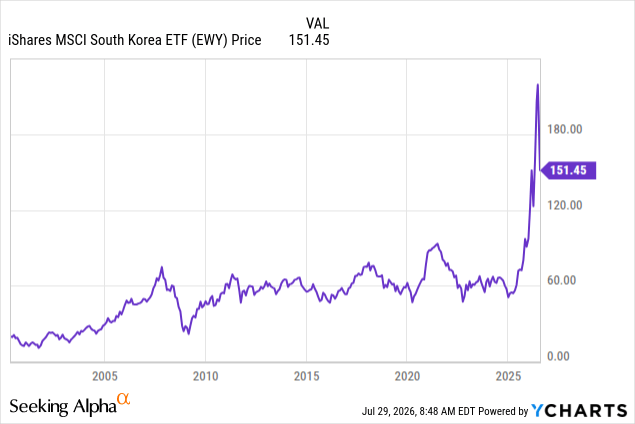
The South Korean stock market index KOSPI (EWY) has been in the center of attention lately. After nearly a parabolic move higher this year by rising over 100%, KOSPI has crashed by over 30% over the last few weeks.
Why is this important?
KOSPI has been nearly perfectly correlated with the Nasdaq (QQQ) when looking at the daily price moves. Thus, the KOSPI crash could be a prelude for the Nasdaq 100 crash.
What's the connection between KOSPI and Nasdaq 100?
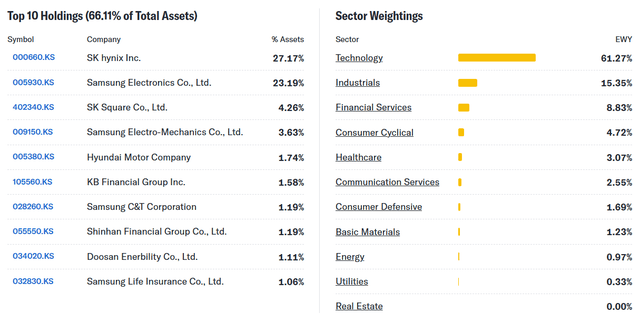
KOSPI is heavily concentrated in only two stocks: SK hynix (SKHY) and Samsung Electronics Co., Ltd (SSNLF) - these two stocks account for over 50% of the index. Both of these stocks are considered HMB chipmakers and thus key suppliers to the US AI infrastructure buildout. Thus, these are the AI hardware stocks.
More specifically, these stocks can be classified as the primary beneficiaries of AI capex, together with stocks like Micron (MU) and Nvidia (NVDA). Note, the Nasdaq 100 is heavily weighted by semiconductors (SMH) - so that's the connection with KOSPI; both are part of the AI capex beneficiary trade.
Thus, the crash in KOSPI can be viewed as the unwind of the AI capex beneficiary trade, or even as the AI bubble burst. Given the perfect correlation with the Nasdaq 100, this supports the AI bubble burst thesis.
The second connection between KOSPI and Nasdaq 100 is the element of high retail speculation using extreme leverage in both indices.
Specifically, the peak and subsequent burst of the KOSPI bubble can be attributed to the launch of single-stock leveraged ETFs on both AI stocks, exactly two months ago.
Apparently, "retail investors poured in 15 trillion won" in these single-stock ETFs. After the recent crash, the South Korean government scheduled an emergency meeting specifically to investigate the effect of leveraged single-stock products.
Similarly, speculation in US stocks listed on the Nasdaq 100 was also rampant with extreme leverage, using products such as the triple-leveraged semiconductor ETF (SOXL). The FINRA margin levels also reached extreme levels, at over $1.5T.
Thus, the heavy use of leverage in KOSPI and Nasdaq 100 supports the AI bubble burst thesis - leverage accelerates the selloff due to margin calls and forced selling as account balances sharply drop.
The fundamental justification
However, the AI bubble burst must be fundamentally justified. So, here is the justification.
The AI trade has three parts:Hyperscalers or the AI capex spenders. These companies invest heavily in AI infrastructure or specifically in building datacenters.
The primary AI capex beneficiaries. These companies benefit from AI capex; they receive the funds. The primary beneficiaries are the chipmakers and AI equipment suppliers. This year the bottleneck was in memory chips, so the HBM chipmakers were the key beneficiaries.
The AI disrupted companies. These are primarily the software companies (IGV), and these stocks have already been sold off.
The AI trade has been solely based on the expected infinite demand for AI compute and the continuous growth in AI capex by hyperscalers - which supports the AI capex beneficiaries trade - that's KOSPI and Nasdaq 100.
Obviously, a stall or a cut in AI capex would bust the AI capex beneficiaries trade - burst the KOSPI and Nasdaq 100 bubble.
Thus, the recent selloff in KOSPI and Nasdaq 100 signals that investors expect an imminent stall or cut in AI capex - which justifies the AI bubble burst.
Why would hyperscalers cut AI capex?
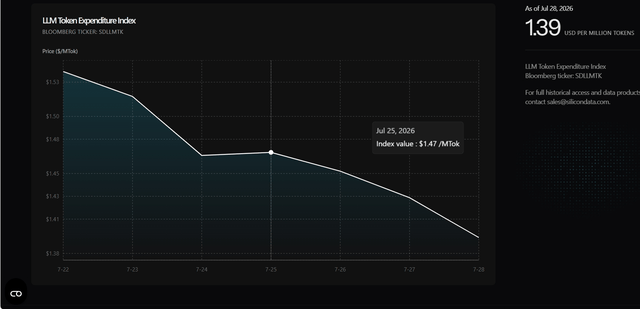
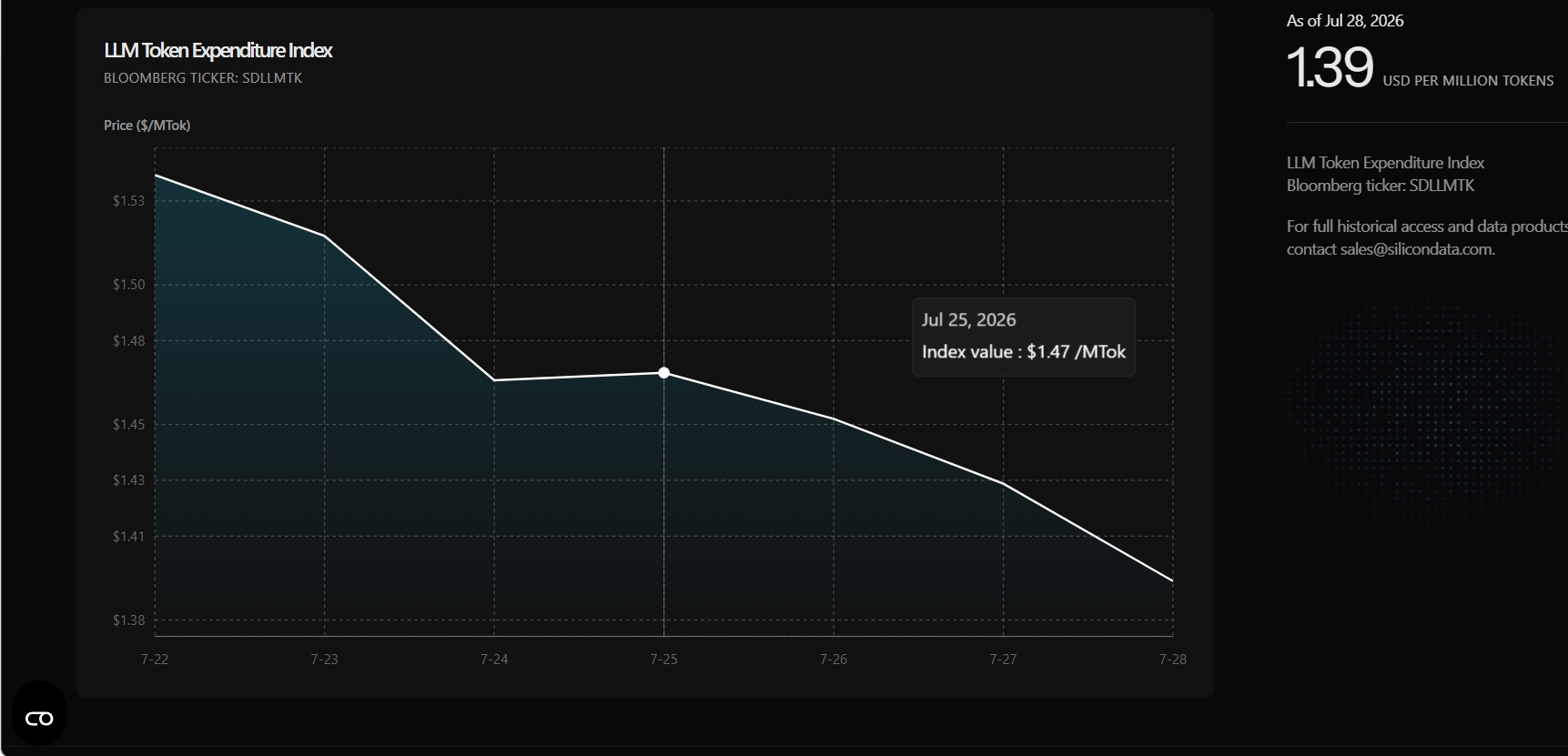
Because their business model is based on selling expensive tokens based on OpenAI (OPENAI) and Anthropic (ANTHRO) closed-weight models, while enterprises demand cheap tokens based on open-weight models, such as Chinese Kimi K3 which is as advanced as the best closed-weight model. So, it's a misguided investment. The fall in token prices essentially means the collapse in the AI business model and thus points to a cut in AI capex. Token prices continue to fall; here is the updated chart of the LLM Token Expenditures Index:
Silicon Data
There is also another variable to consider. Chinese are also developing their own machines to make chips - this ultimately points to chip oversupply and a fall in memory prices.
So, that's the fundamental justification for the AI bubble burst: token prices are falling due to open-weight models, and there is a threat of chip oversupply as Chinese start producing chips.
Thus, it's likely that the KOSPI crash is the bust in the AI capex beneficiaries trade, which is confirmed with the selloff in the Nasdaq 100. Except, the Nasdaq 100 has not crashed yet at the same level, but it's likely that the current selloff will extend in both indices - as forced selling accelerates due to leverage, and as the AI fundamentals continue to deteriorate.
More on KOSPI
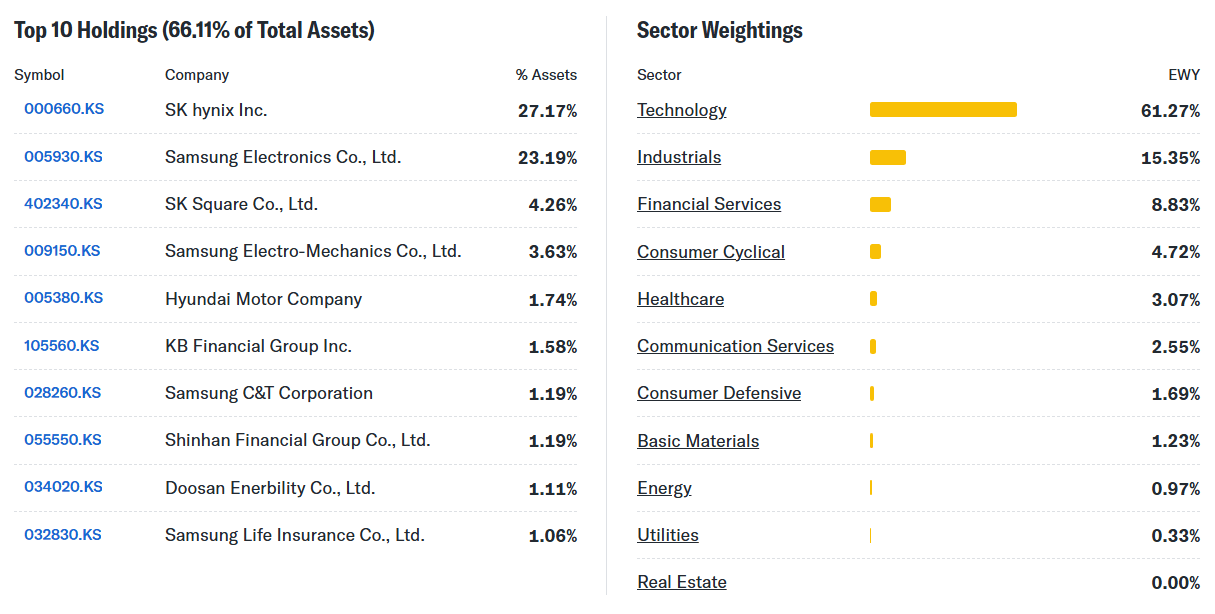
Here is a snapshot of KOSPI showing heavy concentration in two stocks, and technology.
Yahoo
A recent report reveals expectations Samsung and SK hynix could get "significant supply agreements with major U.S. tech firms" after SK President Lee Jae Myung's visit to Silicon Valley.
The main thrust of the conversations will likely be Korea's support for AI infrastructure in the United States and its provision of cutting-edge HBM chips used in graphics processing units that supply AI data centers for large language models.
Here is the KOSPI chart. KOSPI has been in a range since 2008 and made a parabolic move higher in 2026 due to the AI trade. The bubble likely busted, as illustrated by the chart.
 Data by YCharts
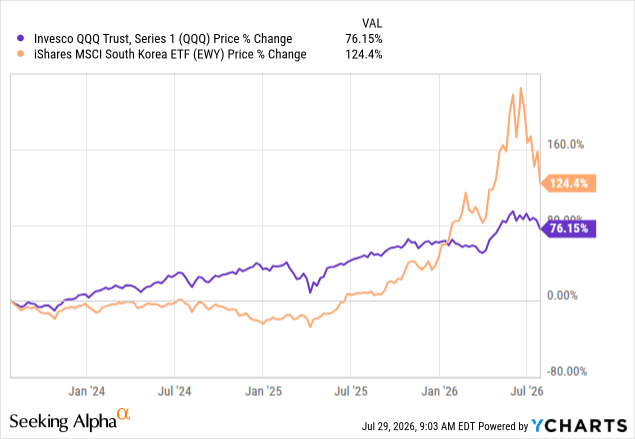
Here is the recent co-movement between KOSPI and Nasdaq 100: KOSPI spiked in 2026 and subsequently busted, and the bust has been correlated with the Nasdaq 100, but more volatile.
 Data by YCharts
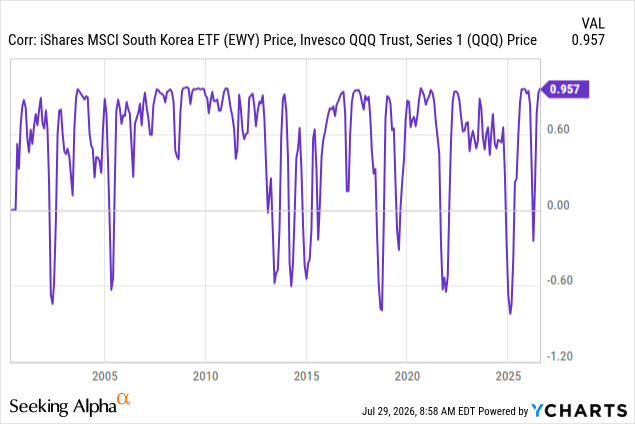
Here is the daily correlation between KOSPI and Nasdaq 100. It's currently at 96% - and this suggests that the KOSPI bubble burst is likely to continue to pressure the Nasdaq 100 as the AI bubble burst unfolds.
 Data by YCharts
Implications
We currently have the fundamental reason to expect that the AI bubble burst is unfolding, the main reason being the falling token prices, which point to an imminent cut in AI capex. Thus, the semiconductor trade is bursting, and that's affecting KOSPI and the Nasdaq 100.
Given the speculation with extreme leverage in KOSPI and Nasdaq 100, it is likely that the AI bubble burst will accelerate. The Nasdaq 100 just entered the 10% correction, and this is likely only the beginning.
Editor's Note: This article discusses one or more securities that do not trade on a major U.S. exchange. Please be aware of the risks associated with these stocks.
This article was written by
Damir Tokic
14.42K Followers
Commodity Trading Adviser (CTA), member of National Futures Association. Professor of Finance, research on Global-macro issues. Editor-in-Chief, Journal of Corporate Accounting and Finance.
Analyst’s Disclosure: I/we have no stock, option or similar derivative position in any of the companies mentioned, and no plans to initiate any such positions within the next 72 hours. I wrote this article myself, and it expresses my own opinions. I am not receiving compensation for it (other than from Seeking Alpha). I have no business relationship with any company whose stock is mentioned in this article.
Seeking Alpha's Disclosure: Past performance is no guarantee of future results. No recommendation or advice is being given as to whether any investment is suitable for a particular investor. Any views or opinions expressed above may not reflect those of Seeking Alpha as a whole. Seeking Alpha is not a licensed securities dealer, broker or US investment adviser or investment bank. Our analysts are third party authors that include both professional investors and individual investors who may not be licensed or certified by any institute or regulatory body.
However, the AI bubble burst must be fundamentally justified. So, here is the justification.
The AI trade has three parts:Hyperscalers or the AI capex spenders. These companies invest heavily in AI infrastructure or specifically in building datacenters.
The primary AI capex beneficiaries. These companies benefit from AI capex; they receive the funds. The primary beneficiaries are the chipmakers and AI equipment suppliers. This year the bottleneck was in memory chips, so the HBM chipmakers were the key beneficiaries.
The AI disrupted companies. These are primarily the software companies (IGV), and these stocks have already been sold off.
The AI trade has been solely based on the expected infinite demand for AI compute and the continuous growth in AI capex by hyperscalers - which supports the AI capex beneficiaries trade - that's KOSPI and Nasdaq 100.
Obviously, a stall or a cut in AI capex would bust the AI capex beneficiaries trade - burst the KOSPI and Nasdaq 100 bubble.
Thus, the recent selloff in KOSPI and Nasdaq 100 signals that investors expect an imminent stall or cut in AI capex - which justifies the AI bubble burst.
Why would hyperscalers cut AI capex?
Because their business model is based on selling expensive tokens based on OpenAI (OPENAI) and Anthropic (ANTHRO) closed-weight models, while enterprises demand cheap tokens based on open-weight models, such as Chinese Kimi K3 which is as advanced as the best closed-weight model. So, it's a misguided investment. The fall in token prices essentially means the collapse in the AI business model and thus points to a cut in AI capex. Token prices continue to fall; here is the updated chart of the LLM Token Expenditures Index:
Silicon Data
There is also another variable to consider. Chinese are also developing their own machines to make chips - this ultimately points to chip oversupply and a fall in memory prices.
So, that's the fundamental justification for the AI bubble burst: token prices are falling due to open-weight models, and there is a threat of chip oversupply as Chinese start producing chips.
Thus, it's likely that the KOSPI crash is the bust in the AI capex beneficiaries trade, which is confirmed with the selloff in the Nasdaq 100. Except, the Nasdaq 100 has not crashed yet at the same level, but it's likely that the current selloff will extend in both indices - as forced selling accelerates due to leverage, and as the AI fundamentals continue to deteriorate.
More on KOSPI
Here is a snapshot of KOSPI showing heavy concentration in two stocks, and technology.
Yahoo
A recent report reveals expectations Samsung and SK hynix could get "significant supply agreements with major U.S. tech firms" after SK President Lee Jae Myung's visit to Silicon Valley.
The main thrust of the conversations will likely be Korea's support for AI infrastructure in the United States and its provision of cutting-edge HBM chips used in graphics processing units that supply AI data centers for large language models.
Here is the KOSPI chart. KOSPI has been in a range since 2008 and made a parabolic move higher in 2026 due to the AI trade. The bubble likely busted, as illustrated by the chart.
Data by YChartsHere is the recent co-movement between KOSPI and Nasdaq 100: KOSPI spiked in 2026 and subsequently busted, and the bust has been correlated with the Nasdaq 100, but more volatile.
Data by YChartsHere is the daily correlation between KOSPI and Nasdaq 100. It's currently at 96% - and this suggests that the KOSPI bubble burst is likely to continue to pressure the Nasdaq 100 as the AI bubble burst unfolds.
Data by YChartsImplications
We currently have the fundamental reason to expect that the AI bubble burst is unfolding, the main reason being the falling token prices, which point to an imminent cut in AI capex. Thus, the semiconductor trade is bursting, and that's affecting KOSPI and the Nasdaq 100.
Given the speculation with extreme leverage in KOSPI and Nasdaq 100, it is likely that the AI bubble burst will accelerate. The Nasdaq 100 just entered the 10% correction, and this is likely only the beginning.
Editor's Note: This article discusses one or more securities that do not trade on a major U.S. exchange. Please be aware of the risks associated with these stocks.
This article was written by
Damir Tokic14.42K Followers
Commodity Trading Adviser (CTA), member of National Futures Association. Professor of Finance, research on Global-macro issues. Editor-in-Chief, Journal of Corporate Accounting and Finance.
Analyst’s Disclosure: I/we have no stock, option or similar derivative position in any of the companies mentioned, and no plans to initiate any such positions within the next 72 hours. I wrote this article myself, and it expresses my own opinions. I am not receiving compensation for it (other than from Seeking Alpha). I have no business relationship with any company whose stock is mentioned in this article.
Seeking Alpha's Disclosure: Past performance is no guarantee of future results. No recommendation or advice is being given as to whether any investment is suitable for a particular investor. Any views or opinions expressed above may not reflect those of Seeking Alpha as a whole. Seeking Alpha is not a licensed securities dealer, broker or US investment adviser or investment bank. Our analysts are third party authors that include both professional investors and individual investors who may not be licensed or certified by any institute or regulatory body.


No comments:
Post a Comment