

Investors all seem to think everyone else is wrong
The Economist
Mar 24, 2026 Markets thrive on contradictions. Every buyer needs a seller – and each thinks they are making a good trade despite the likelihood that the other is at least as well-informed as they are. Investors know that markets are the best prediction engines out there, and try to beat them anyway.

Perhaps the most useful piece of financial theory, the “no-arbitrage” principle, says that portfolios with the same payoffs must have the same price. Yet if this were always true, the arbitrageurs who profit from enforcing it would go out of business and there would be no one left to do so.
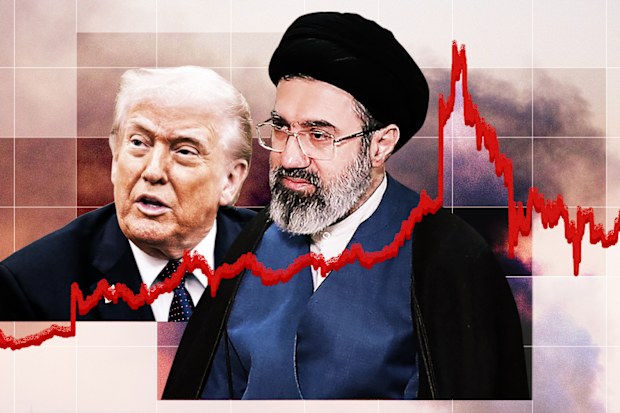
Markets in every asset class, though excellent at pricing known risks, are ill-equipped to account for the radical uncertainty that comes from a war. Michaela Pollock
Just now a far starker and more dangerous cognitive dissonance is gripping markets. Speak to virtually anyone who works on a trading floor, and they will sound somewhere between unnerved and panicked that the Strait of Hormuz remains shut. No one knows when it will reopen; in the meantime, a fifth of the world’s supply of oil and liquefied natural gas is trapped.
The closer someone sits to the commodities desk, according to one trading boss, the more freaked out they tend to be. But everyone – whether they deal in energy, bonds or stocks – seems to say the same thing: market pricing betrays a staggering optimism about a bad situation that could get an awful lot worse.
Exhibit A is Brent crude, the global oil benchmark. Its price has climbed 40 per cent since the latest Gulf war began and is now around $US100 a barrel. With such a hefty proportion of the world’s output stranded, however, even this level makes sense only if you believe fleets of oil-laden tankers will be chugging through Hormuz within weeks.
US President Donald Trump would certainly like markets to think so, having said on March 23 that his country and Iran were having “in-depth, detailed and constructive conversations” about ending the war. Traders naturally take such claims with a huge pinch of salt, given Trump’s obvious desire for lower energy prices and less-than-impeccable reputation for honesty. Even so, Brent crude’s price promptly fell more than 10 per cent.
The relief rally that followed for other assets felt equally dissonant, given that Gulf countries would need months to normalise oil flows even if Hormuz reopened tomorrow. Odder still, it included gold, the price of which had previously been cratering. Gold is investors’ traditional hedge against geopolitical chaos and spiralling inflation – two risks that shot up the agenda as the US and Israel began to bomb Iran.
Yet even as conflict rages and soaring energy costs threaten broader price rises, the glittering haven has failed. Gold’s price has been on such a tear in recent years that investors have come to treat it not as a time-honoured hedge but as just another risky asset.
Should the nightmare scenario unfold, with the Gulf war lasting for months or years and an energy shock plunging the world into recession, it is equity investors who will end up looking the most flat-footed. Share prices have fallen, but on most big bourses they are not even in “correction” territory (meaning a drop of more than 10 per cent from a recent peak).
The US’ S&P 500 index is within a few per cent of its record high. Many of the people who are bidding it there, meanwhile, are sitting mere desks away from commodity analysts discussing the disastrous consequences for the world economy of Hormuz staying shut.
Just now a far starker and more dangerous cognitive dissonance is gripping markets. Speak to virtually anyone who works on a trading floor, and they will sound somewhere between unnerved and panicked that the Strait of Hormuz remains shut. No one knows when it will reopen; in the meantime, a fifth of the world’s supply of oil and liquefied natural gas is trapped.
The closer someone sits to the commodities desk, according to one trading boss, the more freaked out they tend to be. But everyone – whether they deal in energy, bonds or stocks – seems to say the same thing: market pricing betrays a staggering optimism about a bad situation that could get an awful lot worse.
Exhibit A is Brent crude, the global oil benchmark. Its price has climbed 40 per cent since the latest Gulf war began and is now around $US100 a barrel. With such a hefty proportion of the world’s output stranded, however, even this level makes sense only if you believe fleets of oil-laden tankers will be chugging through Hormuz within weeks.
US President Donald Trump would certainly like markets to think so, having said on March 23 that his country and Iran were having “in-depth, detailed and constructive conversations” about ending the war. Traders naturally take such claims with a huge pinch of salt, given Trump’s obvious desire for lower energy prices and less-than-impeccable reputation for honesty. Even so, Brent crude’s price promptly fell more than 10 per cent.
The relief rally that followed for other assets felt equally dissonant, given that Gulf countries would need months to normalise oil flows even if Hormuz reopened tomorrow. Odder still, it included gold, the price of which had previously been cratering. Gold is investors’ traditional hedge against geopolitical chaos and spiralling inflation – two risks that shot up the agenda as the US and Israel began to bomb Iran.
Yet even as conflict rages and soaring energy costs threaten broader price rises, the glittering haven has failed. Gold’s price has been on such a tear in recent years that investors have come to treat it not as a time-honoured hedge but as just another risky asset.
Should the nightmare scenario unfold, with the Gulf war lasting for months or years and an energy shock plunging the world into recession, it is equity investors who will end up looking the most flat-footed. Share prices have fallen, but on most big bourses they are not even in “correction” territory (meaning a drop of more than 10 per cent from a recent peak).
The US’ S&P 500 index is within a few per cent of its record high. Many of the people who are bidding it there, meanwhile, are sitting mere desks away from commodity analysts discussing the disastrous consequences for the world economy of Hormuz staying shut.
What on earth is going on? Some of the confusion is entirely logical. Reasonable bond investors, for instance, can differ over whether the inflationary impact of the oil shock (which should push bond prices down and yields up) will be more or less important than the hit to growth (which tugs them the other way). No one knows for certain how central bankers will react.
And markets in every asset class, though excellent at pricing known risks, are ill-equipped to account for the radical uncertainty that comes from a war. If it is near-impossible even to set out all the possible outcomes, there is only so much traders can do.
Moreover, Pollyannas have been richly rewarded of late. For years shareholders who have sold when disaster beckons – from COVID-19 to Russia’s invasion of Ukraine and Trump’s trade war – have looked on as prices rebound, and then some.
Yet, the belief that they always will becomes dangerous if it leads you to miss signs of serious trouble. Right now, elevated energy prices, higher inflation and wider government deficits seem all but nailed on. Ignoring that might be a contradiction too far.
Moreover, Pollyannas have been richly rewarded of late. For years shareholders who have sold when disaster beckons – from COVID-19 to Russia’s invasion of Ukraine and Trump’s trade war – have looked on as prices rebound, and then some.
Yet, the belief that they always will becomes dangerous if it leads you to miss signs of serious trouble. Right now, elevated energy prices, higher inflation and wider government deficits seem all but nailed on. Ignoring that might be a contradiction too far.
This article was first published by The Economist and republished by The Financial Review


No comments:
Post a Comment